Big Blue's Transformation

classic Classic list List threaded Threaded
7421 messages Options
1 ... 48495051525354 ... 372
Reply | Threaded
Open this post in threaded view
|

Re: Big Blue's Transformation

ArdWrknTrk
Administrator
And hence the reason for a specialty thread lube for high torque fasteners....
 Jim,
Lil'Red is a '87 F250 HD, 4.10's, 1356 4x4, Zf-5, 3G, PMGR, Saginaw PS, desmogged with a Holley 80508 and Performer intake.
Too much other stuff to mention.
Reply | Threaded
Open this post in threaded view
|

Re: Big Blue's Transformation

85lebaront2
Administrator
In reply to this post by Gary Lewis
The question still is, how much stress/strain did you put on the bolts? We had a Raymond Bolt-Master that I would have loved to grab when it was decided to ditch it. The thing was an ultrasonic bolt stretch measuring device. The engineer who came in to demo and train us on it just happened to have an Oldsmobile 5.7L Diesel. He showed us some engine running data on the inside head bolt between #5 & 7 cylinders. The load on the bolt was incredible, the bolts themselves were stronger than Gr8, closest thing I saw to it was FFS-86 socket head cap screws.
Bill AKA "LOBO" Profile

"Getting old is inevitable, growing up is optional" Darth Vader 1986 F350 460 converted to MAF/SEFI, E4OD 12X3 1/2 rear brakes, traction loc 3:55 gear, 160 amp 3G alternator Wife's 2011 Flex Limited Daily Driver 2009 Flex Limited with factory tow package Project car 1986 Chrysler LeBaron convertible 2.2L Turbo II, modified A413

Reply | Threaded
Open this post in threaded view
|

Re: Big Blue's Transformation

Gary Lewis
Administrator
I put the stress or strain generated by between 90 and 120 ft-lbs of torque on them.  In other words, less than that generated by the normal 140 ft-lbs.

I say that because while I put 140 ft-lbs of torque into the bolts, the fact that they weren't well lubed means that something between 20 and 50 ft-lbs of torque was being used to overcome the extra friction.  And that comes from having marked where the bolts were and then tightening them to that point after they were lubed.  It took between 90 and 120 ft-lbs to get them back to that point.  Then I tightened them to 140 and the bolts turned an additional 1/8 to 3/16's turn.
Gary, AKA "Gary fellow": Profile

Dad's: '81 F150 Ranger XLT 4x4: Down for restomod: Full-roller "stroked 351M" w/Trick Flow heads & intake, EEC-V SEFI/E4OD/3.50 gears w/Kevlar clutches
Blue: 2015 F150 Platinum 4x4 SuperCrew wearing Blue Jeans & sporting a 3.5L EB & Max Tow
Big Blue: 1985 F250HD 4x4: 460/ZF5/3.55's, D60 w/Ox locker & 10.25 Sterling/Trutrac, Blue Top & Borgeson, & EEC-V MAF/SEFI

Reply | Threaded
Open this post in threaded view
|

Re: Big Blue's Transformation

ArdWrknTrk
Administrator
This post was updated on .
Strain is HUGE compared to torque!

Remember, it's not torque.
The thread is a ramp, and that incline is what's pulling on the bolt.
Oil means there's less torque needed to overcome striction (the cracking popping noises you heard) but strain is dictated by the ratio of the length of wrench you use to the radius of the bolt, X the ramp you would have if you unwrapped, or unrolled, the thread.

That's why fine pitch fasteners generate more clamping force for a given bolt diameter.  🤓

*Stiction*.  ,,,, Grumble, grumble, 'old man shaking fist'
 Jim,
Lil'Red is a '87 F250 HD, 4.10's, 1356 4x4, Zf-5, 3G, PMGR, Saginaw PS, desmogged with a Holley 80508 and Performer intake.
Too much other stuff to mention.
Reply | Threaded
Open this post in threaded view
|

Re: Big Blue's Transformation

Gary Lewis
Administrator
Yes, I understand the physics involved.  But you aren't saying I damaged the fasteners - right?

Basically, the head wasn't clamped as tightly to the block as it should have been.  Let's say the bolts averaged 105 ft-lbs (the mid-point between 90 and 120 that I measured) of torque instead of the 140 they were supposed to have.  That's exactly 75% of the torque.  

Anyway, I did some painting today.  I'll let it set up for a couple of days, and then on Wednesday I'll install the push rods and shims that came in today.  (Tomorrow we are going to go see Ford vs Ferrari and sit in D-Boxes.  )


Gary, AKA "Gary fellow": Profile

Dad's: '81 F150 Ranger XLT 4x4: Down for restomod: Full-roller "stroked 351M" w/Trick Flow heads & intake, EEC-V SEFI/E4OD/3.50 gears w/Kevlar clutches
Blue: 2015 F150 Platinum 4x4 SuperCrew wearing Blue Jeans & sporting a 3.5L EB & Max Tow
Big Blue: 1985 F250HD 4x4: 460/ZF5/3.55's, D60 w/Ox locker & 10.25 Sterling/Trutrac, Blue Top & Borgeson, & EEC-V MAF/SEFI

Reply | Threaded
Open this post in threaded view
|

Re: Big Blue's Transformation

ArdWrknTrk
Administrator
This post was updated on .
What I'm saying is that when you measure torque and not stretch or clamping force you are relying in the condition of the threads deep in a hole, and the friction/stiction of the bolt as it goes in.

With rod bolts you can measure length with a mic.

In blind holes they have force indicating washers that 'bleed' when they reach the right clamping force.
Or, you have torque to yield....

A bolt can never be too slippery for torque (unless the figure has been adjusted for unforseen "stuff".)
 Jim,
Lil'Red is a '87 F250 HD, 4.10's, 1356 4x4, Zf-5, 3G, PMGR, Saginaw PS, desmogged with a Holley 80508 and Performer intake.
Too much other stuff to mention.
Reply | Threaded
Open this post in threaded view
|

Re: Big Blue's Transformation

Gary Lewis
Administrator
Ok, thanks.
Gary, AKA "Gary fellow": Profile

Dad's: '81 F150 Ranger XLT 4x4: Down for restomod: Full-roller "stroked 351M" w/Trick Flow heads & intake, EEC-V SEFI/E4OD/3.50 gears w/Kevlar clutches
Blue: 2015 F150 Platinum 4x4 SuperCrew wearing Blue Jeans & sporting a 3.5L EB & Max Tow
Big Blue: 1985 F250HD 4x4: 460/ZF5/3.55's, D60 w/Ox locker & 10.25 Sterling/Trutrac, Blue Top & Borgeson, & EEC-V MAF/SEFI

Reply | Threaded
Open this post in threaded view
|

Re: Big Blue's Transformation

ArdWrknTrk
Administrator
Engine looks fantastic, BTW!   👍
 Jim,
Lil'Red is a '87 F250 HD, 4.10's, 1356 4x4, Zf-5, 3G, PMGR, Saginaw PS, desmogged with a Holley 80508 and Performer intake.
Too much other stuff to mention.
Reply | Threaded
Open this post in threaded view
|

Re: Big Blue's Transformation

grumpin
That motor is looking good!
Dane
1986 F250HD SC XLT Lariat 4x4 460 C6-Sold
1992 Bronco XLT 4x4 351W E4OD
1998 GMC Sierra SLE K1500 350 4L60E
Arizona
Reply | Threaded
Open this post in threaded view
|

Re: Big Blue's Transformation

Ford F834
Administrator
In reply to this post by Gary Lewis
Wow! That looks amazing Gary! Very nice work! I know in the IDI world, that using the correct ARP supplied lube is important to successful head stud installation. Guys who don’t use it, or use something else end up regretting it.
SHORT BED 4-DOOR DIESEL: 1986 F350 4x4 under construction-- 7.3 IDIT ZF5+GVOD

STRAIGHT SIX 4X4: 1981 F150 2wd to 4x4-- 300 I6 close ratio diesel T19, hydroboost brakes, Saginaw steering

BIG F: 1995 F-Superduty under construction— converting to 6.9L IDI diesel ZF5+DNE2
Reply | Threaded
Open this post in threaded view
|

Re: Big Blue's Transformation

Gary Lewis
Administrator
Thanks, guys!  

On the lube, I liked the ARP lube's results.  Seemed like the bolts went in more smoothly than with lots of engine oil.
Gary, AKA "Gary fellow": Profile

Dad's: '81 F150 Ranger XLT 4x4: Down for restomod: Full-roller "stroked 351M" w/Trick Flow heads & intake, EEC-V SEFI/E4OD/3.50 gears w/Kevlar clutches
Blue: 2015 F150 Platinum 4x4 SuperCrew wearing Blue Jeans & sporting a 3.5L EB & Max Tow
Big Blue: 1985 F250HD 4x4: 460/ZF5/3.55's, D60 w/Ox locker & 10.25 Sterling/Trutrac, Blue Top & Borgeson, & EEC-V MAF/SEFI

Reply | Threaded
Open this post in threaded view
|

Re: Big Blue's Transformation

ArdWrknTrk
Administrator
Engine oil doesn't have the EP additives nor the viscosity to stay put when torquing fasteners.

That's why I use STP.
 Jim,
Lil'Red is a '87 F250 HD, 4.10's, 1356 4x4, Zf-5, 3G, PMGR, Saginaw PS, desmogged with a Holley 80508 and Performer intake.
Too much other stuff to mention.
Reply | Threaded
Open this post in threaded view
|

Re: Big Blue's Transformation

Gary Lewis
Administrator
Good point.  The oil I used used is a 10W30 synthetic mix, but it took a lot of it to get the bolts to go in smoothly.  And then it made a mess.  So, I like the ARP stuff.  But, I'd recommend a container with a brush as the little packet I had was messy.  And that grease is very black and is hard to get off your fingers.
Gary, AKA "Gary fellow": Profile

Dad's: '81 F150 Ranger XLT 4x4: Down for restomod: Full-roller "stroked 351M" w/Trick Flow heads & intake, EEC-V SEFI/E4OD/3.50 gears w/Kevlar clutches
Blue: 2015 F150 Platinum 4x4 SuperCrew wearing Blue Jeans & sporting a 3.5L EB & Max Tow
Big Blue: 1985 F250HD 4x4: 460/ZF5/3.55's, D60 w/Ox locker & 10.25 Sterling/Trutrac, Blue Top & Borgeson, & EEC-V MAF/SEFI

Reply | Threaded
Open this post in threaded view
|

Re: Big Blue's Transformation

ArdWrknTrk
Administrator
Moly + graphite is really messy.

But it's a tremendous lube for stuff like that.

Honda Moly-60 paste was about the same and came in a cardboard tube much like a mini grease gun tube.

Lubriplate has some in squeeze tubes like you'd find contact cement or 3M moulding adhesive.
 Jim,
Lil'Red is a '87 F250 HD, 4.10's, 1356 4x4, Zf-5, 3G, PMGR, Saginaw PS, desmogged with a Holley 80508 and Performer intake.
Too much other stuff to mention.
Reply | Threaded
Open this post in threaded view
|

Re: Big Blue's Transformation

Gary Lewis
Administrator
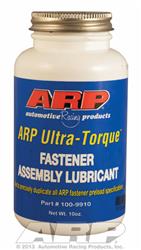
Yep, it is messy.  So were I to do it again I'd order this, and the text with it says:

Because of frictional inconsistencies with oil, moly, and other lubricants it takes multiple cycles of torquing the bolt, loosening it, and tightening it again to obtain the required preload or stretch. Typically, when a fastener is first tightened, friction is at its highest point and the preload value or stretch is low. As the fastener is cycled numerous times the friction decreases and the preload increases. This phenomenon is called "preload scatter." With ARP Ultra Torque assembly lubricant, a fastener need only be torqued once to get within 5 percent of ideal preload, and it remains consistent through all subsequent cycles (from race-prep machining through final assembly). Moreover, given the inconsistencies of ordinary lubes, it is quite possible for adjacent head bolts or studs to have vastly different preloads. This scatter causes bore distortion, hampers piston ring seal, and leads to poor head gasket sealing.

Gary, AKA "Gary fellow": Profile

Dad's: '81 F150 Ranger XLT 4x4: Down for restomod: Full-roller "stroked 351M" w/Trick Flow heads & intake, EEC-V SEFI/E4OD/3.50 gears w/Kevlar clutches
Blue: 2015 F150 Platinum 4x4 SuperCrew wearing Blue Jeans & sporting a 3.5L EB & Max Tow
Big Blue: 1985 F250HD 4x4: 460/ZF5/3.55's, D60 w/Ox locker & 10.25 Sterling/Trutrac, Blue Top & Borgeson, & EEC-V MAF/SEFI

Reply | Threaded
Open this post in threaded view
|

Re: Big Blue's Transformation

ArdWrknTrk
Administrator
Agree 100%!
And you see that in the first post on this page.

I was trying to point out there are shade tree methods vastly superior to engine oil.
But if you have the $ & time to get The Right Stuff from ARP, SPS or wherever, go for it!
 Jim,
Lil'Red is a '87 F250 HD, 4.10's, 1356 4x4, Zf-5, 3G, PMGR, Saginaw PS, desmogged with a Holley 80508 and Performer intake.
Too much other stuff to mention.
Reply | Threaded
Open this post in threaded view
|

Re: Big Blue's Transformation

85lebaront2
Administrator
Jim, the point I was trying to make was stick with the manufacturer's specified procedure if you are using aftermarket premium bolts or studs, then use what the yprescribe, if using OEM fasteners then use the OEM procedure. Lubiing the Ford bolts with something a slippery as ARP's lube may cause the bolts to be over stressed at the same torque value.
Bill AKA "LOBO" Profile

"Getting old is inevitable, growing up is optional" Darth Vader 1986 F350 460 converted to MAF/SEFI, E4OD 12X3 1/2 rear brakes, traction loc 3:55 gear, 160 amp 3G alternator Wife's 2011 Flex Limited Daily Driver 2009 Flex Limited with factory tow package Project car 1986 Chrysler LeBaron convertible 2.2L Turbo II, modified A413

Reply | Threaded
Open this post in threaded view
|

Re: Big Blue's Transformation

ArdWrknTrk
Administrator
I thought that what I said last night about torque values being adjusted for less than optimal conditions was clear enough, but I guess not.
Of course "follow the instructions" (in deference to Gary) but the readings will never be as consistent as a properly lubed bolt.
 Jim,
Lil'Red is a '87 F250 HD, 4.10's, 1356 4x4, Zf-5, 3G, PMGR, Saginaw PS, desmogged with a Holley 80508 and Performer intake.
Too much other stuff to mention.
Reply | Threaded
Open this post in threaded view
|

Re: Big Blue's Transformation

Gary Lewis
Administrator
Oddly enough, the factory shop manual doesn't appear to say anything about lubricating 460 head bolts.  But it does say that 4.9L head bolt threads should be lubricated by engine oil.  That seems strange.  But Scotty said to lube the threads and under the head with engine oil.

And, my comparison of using engine oil vs the ARP lube seemed to get the same results - the bolts torqued to the same positions.
Gary, AKA "Gary fellow": Profile

Dad's: '81 F150 Ranger XLT 4x4: Down for restomod: Full-roller "stroked 351M" w/Trick Flow heads & intake, EEC-V SEFI/E4OD/3.50 gears w/Kevlar clutches
Blue: 2015 F150 Platinum 4x4 SuperCrew wearing Blue Jeans & sporting a 3.5L EB & Max Tow
Big Blue: 1985 F250HD 4x4: 460/ZF5/3.55's, D60 w/Ox locker & 10.25 Sterling/Trutrac, Blue Top & Borgeson, & EEC-V MAF/SEFI

Reply | Threaded
Open this post in threaded view
|

Re: Big Blue's Transformation

Gary Lewis
Administrator
Speaking of the factory shop manual, it is a bit suspect in this sequence for installing the "hachet"/damper spacer and the damper:

3. Install crankshaft damper spacer on the inner
Woodruff key. Apply Gasket Maker
E2AZ-19562-B or equivalent meeting Ford
specification WSK-M2G348-A5 to the front of the
key on the crankshaft, and in the keyway inside
the crankshaft damper spacer, after installing
spacer. Install Woodruff key for crankshaft
vibration damper.
4. Apply Ford Multi-Purpose Grease
D0AZ-19584-AA or equivalent meeting Ford
specification ESB-M1C93-A to the front seal
rubbing surface of the crankshaft vibration
damper inner hub to prevent damage to the
crankshaft front seal. Apply Ford Multi-Purpose
Grease D0AZ-19584-AA or equivalent meeting
Ford specification ESB-M1C93-A to the front of
the crankshaft for crankshaft vibration damper
installation.

How do you apply Gasket Maker to the front of the key on the crankshaft after installing the damper spacer?  And there's no "front seal rubbing surface" on the damper.  

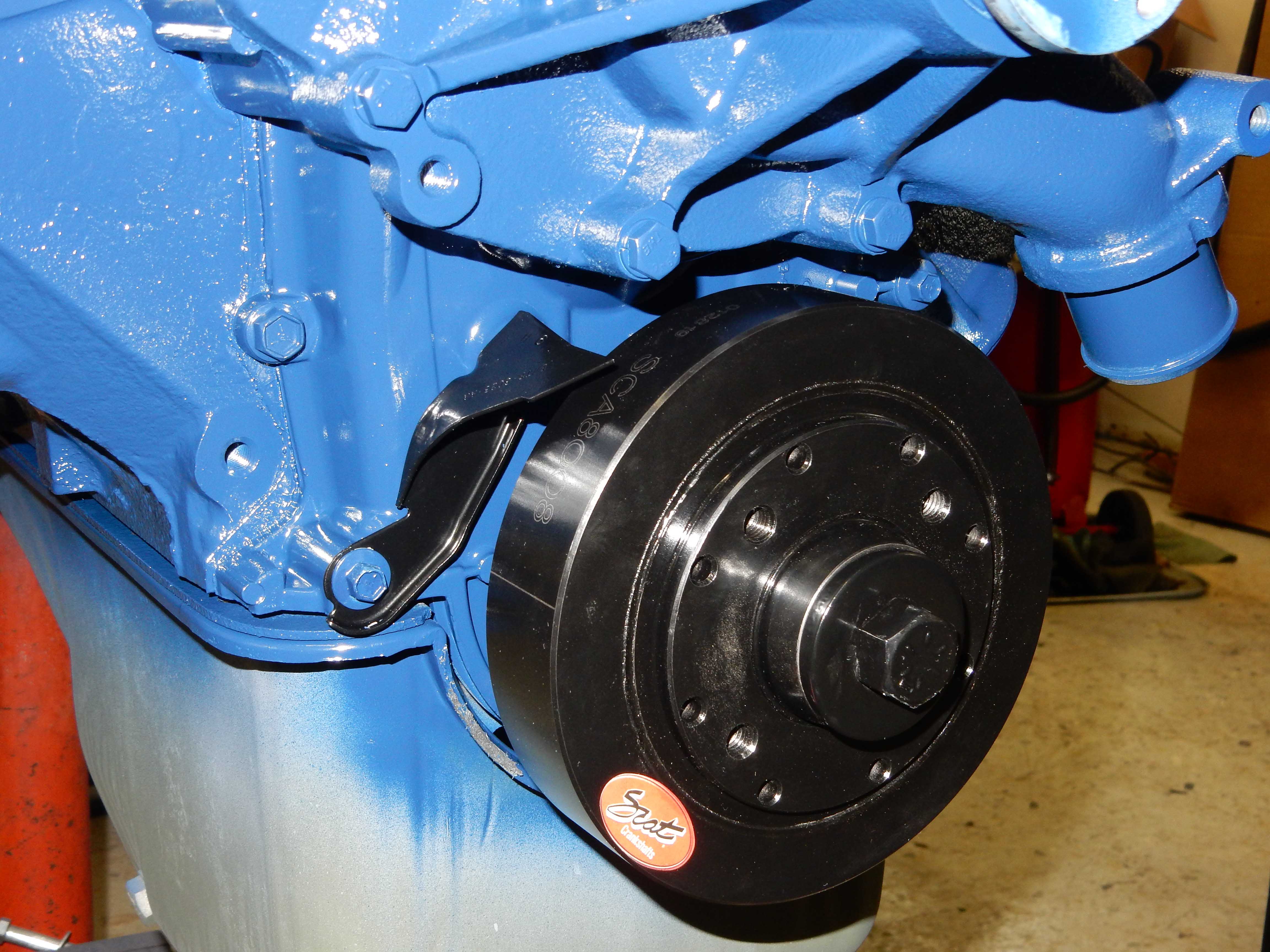
So I applied grease to the spacer's front seal rubbing surface and then Permatex Super Form-A-Gasket to the front of the key as well as the keyway to the spacer and installed the spacer.  Then I dobbed FAM on the front of the keyway and installed the damper.

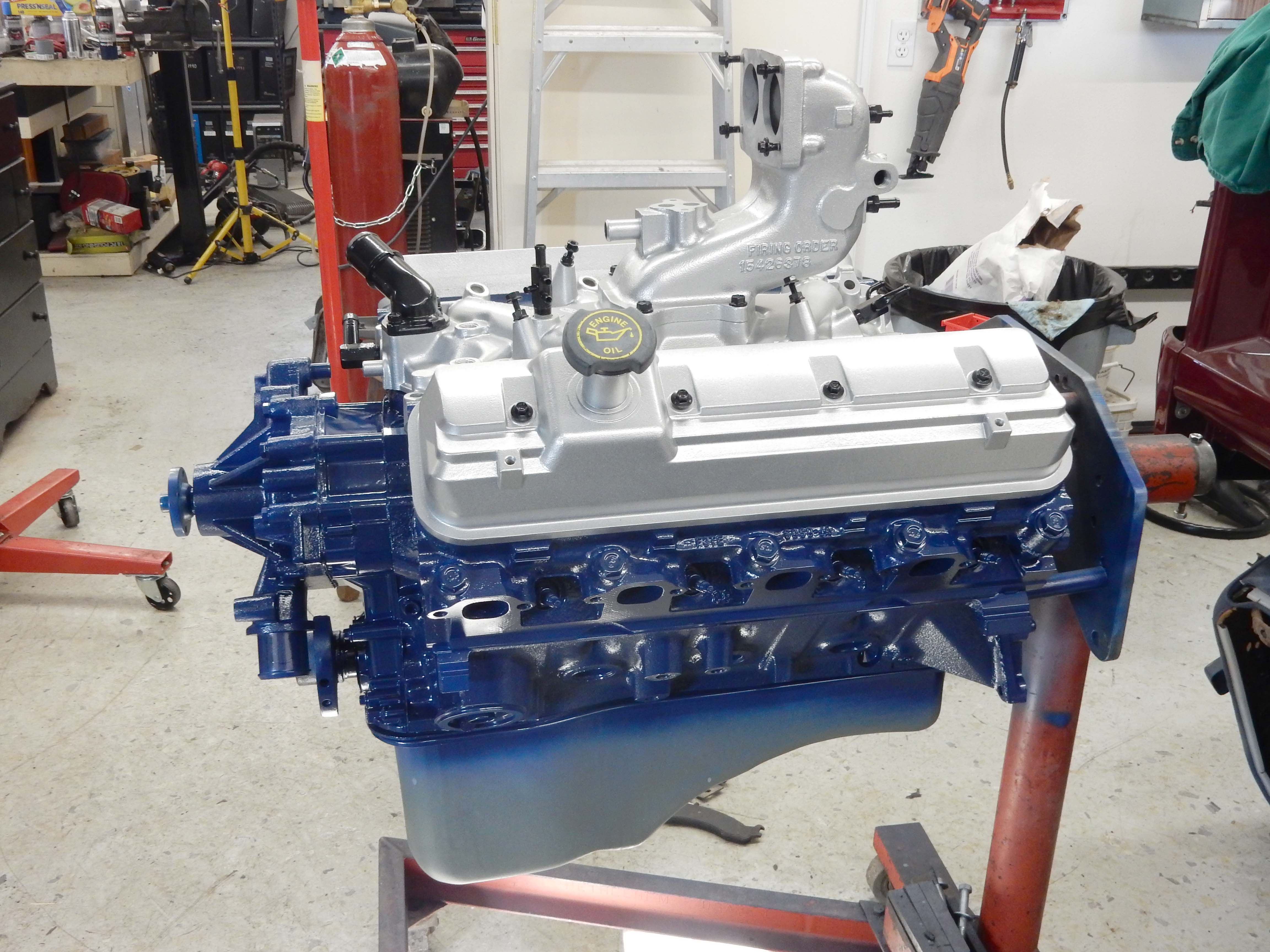
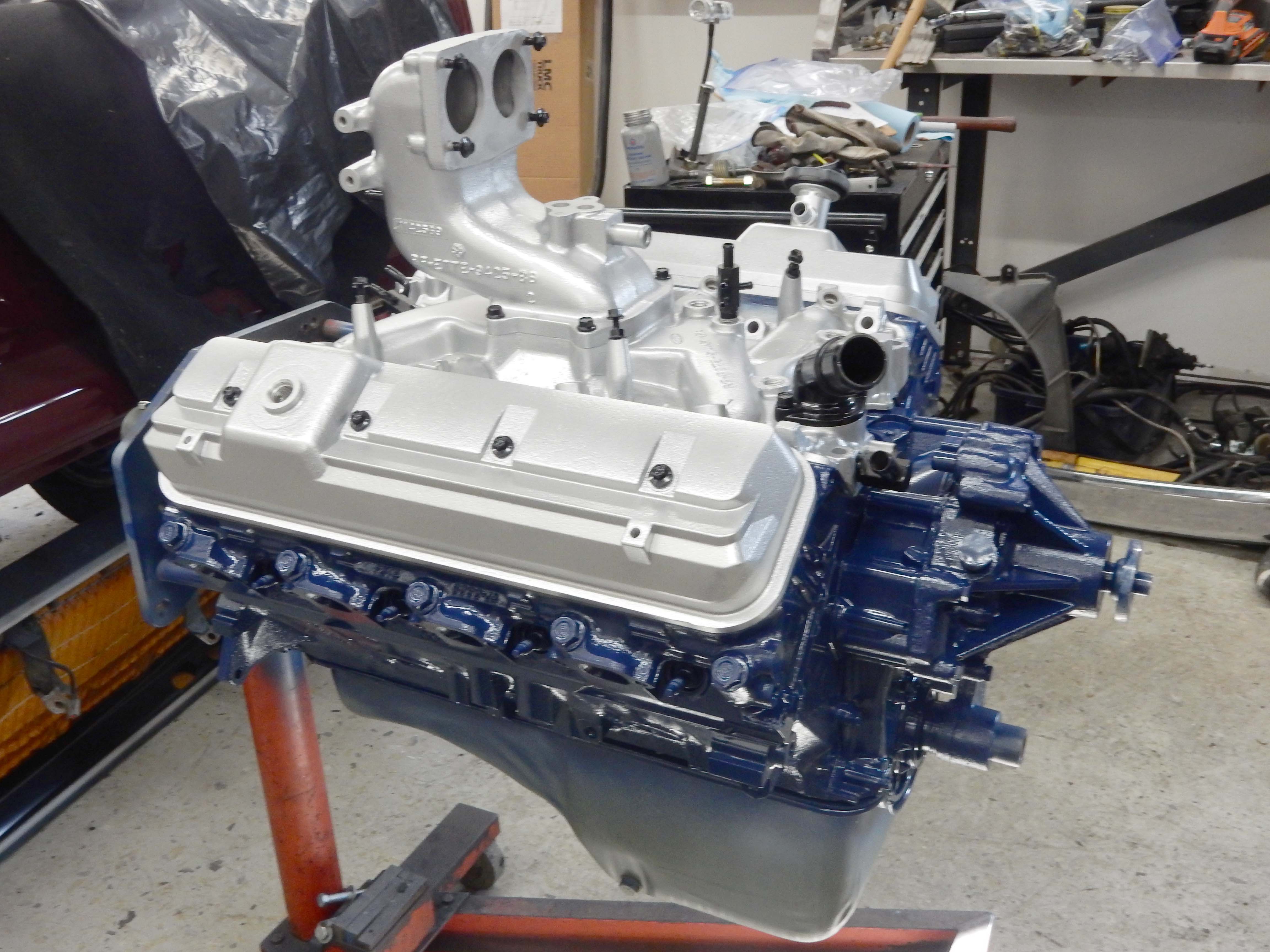
And, having PC'd the pointer and damper bolt, the whole thing came out looking like this, although the flash washed out the dark blue.  And, note that the damper has the 1/4 turns already marked, so I'm ready to start installing push rods and shims.  


Gary, AKA "Gary fellow": Profile

Dad's: '81 F150 Ranger XLT 4x4: Down for restomod: Full-roller "stroked 351M" w/Trick Flow heads & intake, EEC-V SEFI/E4OD/3.50 gears w/Kevlar clutches
Blue: 2015 F150 Platinum 4x4 SuperCrew wearing Blue Jeans & sporting a 3.5L EB & Max Tow
Big Blue: 1985 F250HD 4x4: 460/ZF5/3.55's, D60 w/Ox locker & 10.25 Sterling/Trutrac, Blue Top & Borgeson, & EEC-V MAF/SEFI

1 ... 48495051525354 ... 372